
Dental Implants vs. Bridges vs. Dentures: An Honest Comparison for Brunswick Patients
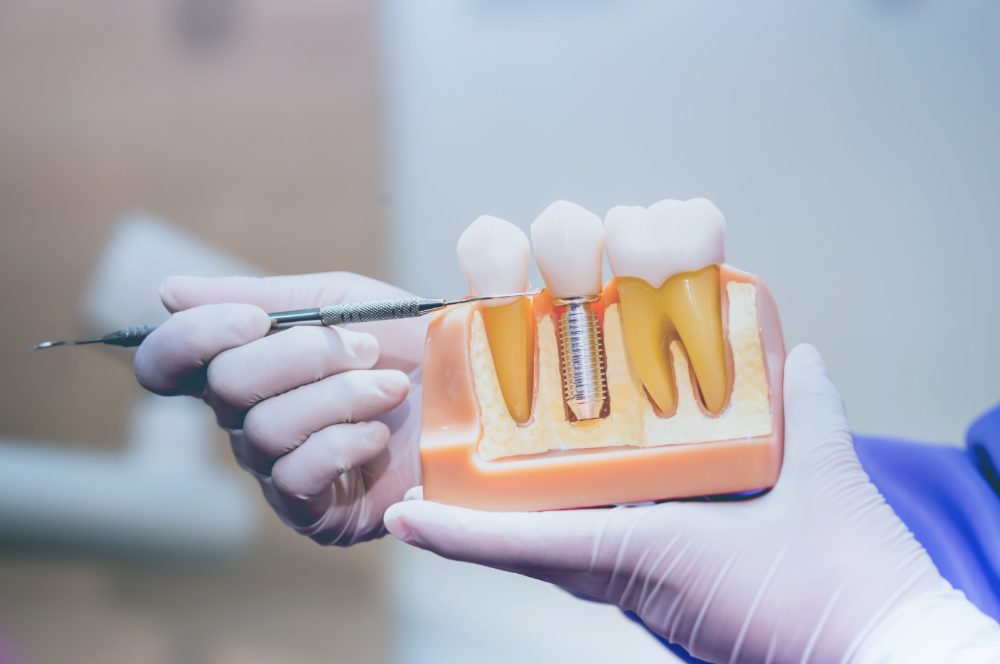
For most patients missing one or two teeth, a dental implant offers the best long-term outcome — but a bridge is often faster and less expensive upfront. For patients missing most of their teeth in one arch, All-on-4 implants typically outperform traditional dentures in comfort, chewing power, and bone preservation, though full dentures remain the most affordable option. The right choice depends on how many teeth you're replacing, your bone density, your budget, and how long you need the solution to last.
Why This Comparison Is So Confusing
If you're weighing your options for replacing missing teeth, you've probably noticed something: every source you find tells you a different story.
Implant clinics claim implants are always the best answer. Denture manufacturers say modern dentures are just as good. Older articles quote statistics from a decade ago that no longer apply. And every option seems to come with its own list of pros, cons, exceptions, and warnings.
Here's the truth: there isn't one right answer. There's a right answer for you, based on your specific situation. This guide is designed to help you figure out what that answer looks like — honestly.
We'll walk through the real advantages and disadvantages of each option, look at how they compare across the factors that actually matter, and finish with a straightforward framework for deciding.
The Three Options at a Glance
Before we get into detail, here's the short version:
Dental implants replace both the visible tooth and the root beneath it. They're surgically placed into the jawbone, integrate over several months, and function like natural teeth for decades. Best for long-term outcomes, but higher upfront cost and longer timeline.
Dental bridges replace one or more missing teeth by attaching artificial teeth to crowns placed on the adjacent healthy teeth. They're faster and less expensive than implants upfront, but the adjacent teeth get reshaped, and the bridge itself typically lasts 10–15 years before needing replacement.
Dentures — full or partial — are removable prosthetics that replace multiple or all missing teeth. They're the most affordable option and the fastest to receive, but they don't stop bone loss, they restrict your diet, and they need to be relined or replaced every 5–10 years.
The Side-by-Side Comparison
Here's how the three options stack up across the factors that actually determine long-term satisfaction.
Cost
Bridges are generally the lowest-cost fixed option for replacing one to three teeth. The upfront investment is smaller than implants, and traditional dental insurance tends to cover a meaningful portion of the cost.
Dentures are the lowest-cost option overall, especially for patients replacing most or all of their teeth. Traditional full dentures require no surgery and are often partially covered by insurance.
Implants carry the highest upfront cost — but this comparison is misleading unless you look at the long term. Because implants can last a lifetime while bridges and dentures require ongoing replacement, the lifetime cost of implants is often equal to or lower than the alternatives when you factor in replacements, relining, adhesives, and repairs over 20–30 years.
Verdict on cost: Bridges and dentures win on upfront affordability. Implants win on long-term value. Which matters more to you depends on your goals and timeline.
Longevity
Bridges typically last 10–15 years before needing replacement. The lifespan is often limited by what happens to the anchor teeth — if either supporting tooth develops decay under the crown or fails structurally, the whole bridge needs to be redone.
Dentures typically need to be relined every 3–5 years and fully replaced every 7–10 years. Even well-made dentures wear out and, more importantly, the shape of your jaw changes over time due to bone loss, which means the fit gradually degrades no matter how well the denture was made.
Implants are designed to last a lifetime. The implants themselves have success rates above 95% and, when properly maintained, often remain in place indefinitely. The visible restoration (the crown or bridge attached to the implant) may need to be replaced eventually — typically after 15–20 years — but the implant post itself usually doesn't.
Verdict on longevity: Implants win decisively.
Bone Preservation
This is the factor most patients don't realize until later, and it often becomes the deciding one.
Your jawbone stays healthy through the pressure and stimulation of chewing, which teeth transmit down through their roots. When you lose a tooth, that stimulation disappears — and the bone in that area begins to shrink within 6–12 months.
Bridges replace the visible tooth but do nothing to stimulate the bone underneath. The bone continues to shrink beneath the bridge, and over years this can affect the fit and appearance of the surrounding teeth.
Dentures actually accelerate bone loss because the constant pressure of a denture resting on the gums promotes resorption. This is why long-term denture wearers often develop the sunken facial appearance associated with aging — the jawbone has literally shrunk.
Implants are the only option that actively stimulates the jawbone the way a natural tooth would. The titanium post transmits chewing forces directly into the bone, preserving density and preventing the shape changes that come with tooth loss.
Verdict on bone preservation: Only implants preserve the underlying jaw structure. This is often what tips long-term thinkers toward implants even when the upfront cost is a stretch.
Chewing Power
Bridges restore about 90% of natural chewing function since they're fixed in place and use natural teeth as anchors. Most patients can eat almost anything with a bridge.
Dentures restore only about 25% of natural chewing force. Denture wearers typically avoid certain foods — steak, corn on the cob, apples, hard bread, sticky foods — and often have to plan meals around what their dentures can handle.
Implants restore close to 100% of natural chewing power. Patients with implants can eat anything they could eat before losing their teeth, without adjustments or worry.
Verdict on chewing power: Implants match natural teeth. Bridges come close. Dentures are a significant compromise.
Comfort and Feel
Bridges feel very close to natural teeth once patients adjust. Because they're fixed in place, there's no movement, no slipping, and no need for adhesives.
Dentures are a compromise, especially at first. Full dentures cover the roof of the mouth (which affects taste and speech), require adhesive to stay secure, and can slip or click during eating and talking. Modern dentures are dramatically better than the ones from a generation ago, but they still don't feel like natural teeth.
Implants feel indistinguishable from natural teeth once healing is complete. There's nothing to remove, no adhesive, no slipping. Most patients report they forget the implant is there within a few months.
Verdict on comfort: Implants match natural teeth. Bridges come close. Dentures require the most adjustment.
Impact on Adjacent Teeth
Bridges require the two healthy teeth on either side of the gap to be filed down and crowned. These teeth are now permanently altered and vulnerable to decay under the crowns over the years. If either fails, the whole bridge fails.
Dentures don't touch adjacent teeth — but partial dentures use clasps that hook onto surrounding teeth, which can put stress on those teeth over time.
Implants stand completely independently. They don't touch, alter, or rely on any other teeth. Every tooth in your mouth is preserved as-is.
Verdict on adjacent teeth: Implants are the only option that leaves surrounding teeth completely untouched.
Timeline
Bridges can typically be completed in 2–3 weeks over two appointments — preparation and impressions on the first visit, permanent placement on the second.
Dentures typically take 4–6 weeks from initial impressions to final delivery.
Implants take longer overall — usually 4–8 months for a single implant case, from consultation through final restoration. Most of that time is the biological healing period during which the implant integrates with the bone. All-on-4 cases can deliver same-day fixed teeth, with the final permanent restoration typically placed 3–4 months later.
Verdict on timeline: If you need a fast solution, bridges or dentures are quicker. If you can invest the time, implants deliver a permanent result.
Maintenance
Bridges require special flossing techniques to clean underneath the artificial teeth, plus attention to preventing decay in the anchor teeth. Beyond that, care is similar to natural teeth.
Dentures require daily removal for cleaning, overnight soaking, and periodic relining as your jaw shape changes. Adhesives are typically part of the daily routine for most wearers.
Implants are cared for exactly like natural teeth — brush, floss, and see your dentist regularly. There's nothing to remove and no special equipment required.
Verdict on maintenance: Implants are the lowest-maintenance option day-to-day.
Real-World Scenarios
The right choice depends on your specific situation. Here's how the options typically break down across the most common scenarios we see in our Brunswick office.
"I'm missing one tooth toward the back of my mouth."
An implant is almost always the recommended solution. The tooth is easy to access surgically, the bone in the area is typically dense enough to support an implant, and you avoid altering the healthy teeth on either side.
A bridge is possible but not ideal here, because you'd be sacrificing two healthy teeth to replace one missing one — a poor trade-off.
"I lost a front tooth from an accident or injury."
An implant is usually the best long-term choice for front teeth, especially in adults. The aesthetic result is superior, the bone preservation matters more in visible areas, and the treatment doesn't require altering adjacent teeth (which is especially important for front teeth that show when you smile).
That said, timing matters. Front tooth cases sometimes benefit from what's called "immediate implant placement" — placing the implant at the same time as the tooth extraction. This isn't right for every case, but when it works, it dramatically shortens the timeline.
"I've had a bridge for 12 years, and now it's failing."
This is a common situation, and the decision comes down to what's happening with the anchor teeth. If they're still healthy, another bridge may be reasonable. If they've developed decay under the crowns or if the bone in the area has shrunk significantly, implants often become the better long-term choice — and give you a solution that won't need replacing again in another decade.
"I'm missing several teeth in a row."
The options here are:
- Multiple single implants (one per missing tooth) — best long-term outcome but higher cost
- An implant-supported bridge (two implants supporting a 3–4 tooth bridge) — cost-effective compromise
- A traditional bridge (using natural teeth as anchors) — only reasonable if the adjacent teeth are healthy and the span isn't too long
- A partial denture — most affordable but the lowest-quality outcome
For most patients in this scenario, an implant-supported bridge is the sweet spot between long-term durability and reasonable cost.
"I'm missing most or all of the teeth on my upper or lower arch."
This is the classic case where All-on-4 implants versus dentures becomes the central decision.
Traditional dentures are the affordable, no-surgery option. If you're older, have significant health considerations, or simply can't afford implant treatment, modern dentures can restore function and appearance reasonably well.
All-on-4 implants offer permanent, fixed teeth supported by just four implants per arch. Most patients don't need bone grafting, many leave with same-day fixed teeth, and the outcome closely mimics having natural teeth again.
For patients who can afford the investment, All-on-4 is dramatically better than dentures across every measure that matters day-to-day — chewing power, comfort, appearance, and bone preservation. The upfront cost is higher, but many patients tell us it was the best money they've ever spent.
"My denture doesn't fit anymore, and I'm tired of adhesive."
Every implant surgeon has heard this story. Long-term denture wearers eventually reach a point where the daily reality — the slipping, the adhesive, the food restrictions, the changing fit — becomes intolerable.
For patients in this situation, implant-supported options are transformative. Two implants can secure an existing denture (called an implant-supported overdenture), or four implants can support a full permanent arch of fixed teeth (All-on-4). Either option eliminates the daily denture struggle.
What Insurance Actually Covers
Coverage varies dramatically by insurance plan.
Bridges are generally the best-covered option under dental insurance. Most plans cover 40–60% of the cost after deductibles, and some cover more.
Dentures are usually well-covered under dental insurance, often at similar levels to bridges. Some plans classify dentures as fully covered basic services.
Implants vary the most in coverage. Some plans cover the crown or restoration portion but not the implant itself. Some cover a percentage of the total. Others exclude implants entirely, treating them as elective even when they're medically necessary. Coverage has been improving over the last decade as implants have become the standard of care, but there's still meaningful variation.
For patients whose insurance doesn't fully cover implants, financing options (including CareCredit and similar patient financing programs) can spread payments over 12–60 months. Our team can walk you through the specifics for your plan at a consultation.
How to Decide: A Simple Framework
If you're still weighing your options, here's a straightforward way to think about it:
Choose bridges if:
- You want a fixed solution and can't invest the time or cost of implants
- The adjacent teeth are already restored or need work anyway
- You need a faster timeline than implants allow
- Your insurance covers bridges but not implants
Choose dentures if:
- You need the most affordable solution possible
- Health considerations rule out surgery
- You're missing all or most of your teeth and cost is the driving factor
- You want a non-surgical solution and can accept the daily maintenance
Choose implants if:
- You want the longest-lasting solution available
- Preserving your jawbone matters to you
- You want to eat, speak, and smile without any daily adjustments
- You're willing to invest more upfront for a solution that shouldn't need replacing
Choose All-on-4 specifically if:
- You're missing most or all of your teeth in one or both arches
- You want fixed (not removable) teeth
- You've been struggling with dentures or facing the prospect of them
The Question Most Patients Don't Ask (But Should)
Here's a question that gets to the heart of the decision:
How long do you plan to need this?
If you're 40 years old and expect to live another 40 years, an implant that lasts a lifetime is a very different value proposition than a bridge you'll need to replace three or four times over the same period. If you're 75 and looking for the most affordable path to restored function, a bridge or denture may make more practical sense — even if implants would technically last longer.
There's no wrong answer to this question. There's just an honest one, and the honest answer usually clarifies the right choice.
Ready to Talk Through Your Specific Situation?
The right choice for you depends on details that generic articles can't cover — your specific bone density, the condition of your remaining teeth, your goals, your timeline, and your budget.
At your consultation, we'll take 3D imaging, evaluate your specific situation, and walk you through the realistic options for your case. Not a sales pitch — an honest conversation about the tradeoffs.
If you want to explore the pros and cons of implants more deeply, see our full guide: The Complete Guide to Dental Implants in Brunswick, OH. If you're leaning toward implants and want to know exactly what the procedure involves, see: What Actually Happens During Dental Implant Surgery.
Schedule your consultation at Hendricks Family Dentistry on Center Road today.
- Mon - Tue 7:00 am - 7:00 pm
- Wed 8:00 am - 5:00 pm
- Thu 7:00 am - 7:00 pm
- Fri 8:00 am - 2:00 pm
- Sat - Sun Closed